Thursday, March 20, 2014

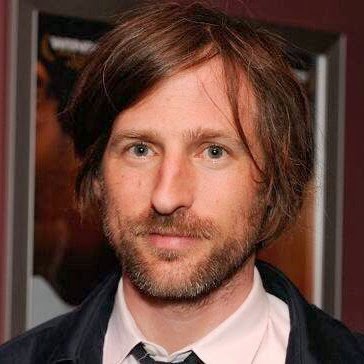
V4 Visionary Highlight.5: Spike Jonze -- By Jake Chamelin

Through the first few installments in our Visionaries series, we've tried to shine a new light on individuals within film and art that have recently come into prominence. While historically the industry has not fully supported an individual who is well rounded in different media forms, the times are changing. Increasingly today, individuals who have a wide range of skills and talents, spread out over many different art forms, hold an advantage in getting ahead. This mastery of different positions on set, from an organizational, business, or creative standpoint, is both an inspiration and challenge for film students currently. As our world modernizes, film goes with it. No longer is a single skill the end all be all. Development of skills from all aspects of the filmmaking process is becoming paramount. 

Such an individual with eclectic tastes and skills is Spike Jonze. Jonze has recently been in the spotlight after his latest film, Her (2013) became a runaway hit and took home the 2014 Academy Award for best original screenplay. While Her is a delicate look into the loneliness of human existence in the not too distant future, Jonze’s body of work is vast and no less impressive. 

Spike Jonze, of course is the pseudonym used by Adam Spiegel, and is heir to a multi-billion dollar catalog business owned by his family. Jonze attended the San Francisco Art Institute, studying photography. From here Jonze embarked on a vast array of different projects. He worked as a photographer for Freestylin’ Magazine, while simultaneously fronting an international BMX club. Throughout the ‘90s Jonze directed many different videos from music videos for the Beastie Boys, Björk, and Weezer. Jonze also directed commercials for Lee Jeans, Wrangler, and IKEA. His first feature film, Being John Malkovich (1999) proved an incredible success. Jonze also was the co-creator and co producer of the Jackass TV series and movies.


Spike Jonze has undertook countless projects, over so many different types of media that it is truly difficult to imagine that the man has any free time at all. But this passion for art and entertainment is something that all must have, a burning drive for projects and seeing them carried through is something all young students and filmmakers can be inspired by. It is for this reason that Jonze is a Visionary worthy of inclusion in our series. His mastery of different art forms and entertainment may well signal a totally new industry, transforming before our very eyes. 


Written by Jacob Smith Chamelin
Web Content Writer
Visions Film Festival & Conference
Wilmington, NC

Friday, March 14, 2014

Visions4 Featured Filmmaker and Scholar Highlight.1 : Animator Whitney Polk and Film Scholar Brandon Konecny


In this first official Visions4 filmmaker highlight, we introduce North Carolina's own Whitney Polk. She is a Film Studies major at the University of North Carolina Wilmington, with a primary focus in the field of animation. Her animated film, The Science of Cats, will kick off our second film block, scheduled for 8:30pm in UNCW's Lumina Theater on April 4th. I was lucky enough to ask Whitney a few questions regarding her film, as well as the experiences that led her all the way to Visions Film Festival and Conference.

Born and raised in Albemarle, North Carolina, Whitney discovered her fascination with film and storytelling after her mother bought their family's first camcorder when Whitney was only 11 years old. The allure of film and her family's home videos soon turned to an interest in visual expression through animated imagery. Although beginning first with cut-out animation, Whitney's favorite mode is hand drawn, flip-book style, because "drawing each frame by hand gives the animation a sense of life that other modes often lack" (Polk PI). This style is present in her festival piece, The Science of Cats, and she explains what inspired such an original piece, as her animation reveals the brisk movement and character of the feline through image and fact: "I grew up with cats. I feel a deep connection with cats and all animals in nature, and I was inspired by that feeling to make the animation. It felt like I was transcribing a cat's spirit onto the film, and that's what kept me motivated throughout the process" (Polk PI). This will be Whitney's first festival appearance, and we are all thrilled at Visions4 to feature such a talented young artist, one with a very bright future in animation.

After film school, Whitney hopes to become a freelance animator for films, commercials, and television. Additionally, she would like to return to cut-out animation. What IS cut-out animation? Whitney explains: "Cut-out animation involves drawing, but once you've drawn the character, you cut them out with the intent to photograph them frame-by-frame and you, the artist, manipulate parts of their body. It's like the 2D version of claymation" (Polk PI). She obviously reveals great knowledge of her craft, a sign of true dedication and promise, especially early in one's career.

As far as Whitney's personal inspirations, Hayao Miyazaki's film, Nausicaä of the Valley of the Wind has had a big impact, not only on current and past projects, but on her thoughts of a pivotal point in any animators career--one that she will continue to strive towards: "All of [Hayao Miyazaki's] animated features are hand-painted cell animation which, to me, comes at the pinnacle of an animator's craft. His films, similar to hand-drawn animations, have so much detail and passion that the films are alive; they exist in time, not as some forgotten Pixar flop, but as a beautiful and priceless motion picture" (Polk PI).

So, with this special highlight, we welcome animator Whitney Polk and her film, The Science of Cats, to Visions Film Festival and Conference on April 4th. If her work, passion, and personal thoughts on animation speak for anything, this will certainly not be her last appearance on a festival platform.

Steven Gamble
Marketing Director
Visions Film Festival and Conference


A Short Interview With Film Scholar Brandon Konecny, author of the Visions4 Conference Selection, The "Unfilmable" Lightness of Being 

Steven Gamble: When did you discover your passion for film and writing? Was it always present, or did you have a particular dawning moment? 

Brandon Konecny: That's a good question, actually. I'm not sure. I consider myself an incurable cinephile, and as such simply like discussing films, be it with friends or whomever. I didn't really ever consider being a "writer" until it became a logical extension of this inclination, the only difference being I get to use formalized language and polysyllabic jargon; and this kind of platform became a necessity when I became a film major, of course. Where this really solidified, though, is when I began writing for Film International, getting some of my stuff published, and hanging out with Jacob Mertens, Film Int.'s review editor and a fantastic writer himself, who taught me what it meant to take the craft of writing seriously.
It's mostly been a means to an end, I guess.

SG: What would you say your favorite subjects of film to write about are? Ex. Feminism, adaptation, genre, cultural analysis, editing?

BK: When it comes to particular interests in film studies, my tastes are pretty broad. I do have some favorites, though. Cultural analysis, for example, looms pretty large in my research, specifically as it relates to various topics in fandom studies. I also enjoy film theory quite a bit, especially as it relates to a lot of the new wave of theorists working today, like Joan Copjec, Todd McGowan, Matthew Flisfeder, and Slavoj ZIzek. It's doing a lot to politicize film scholarship and help film theory shake off some of the sweeping generalizations and totalizing tendencies of the early Screen theorists and French film scholars like Christian Metz; it's given theory more specificity as it relates to engagement with filmic texts. Genre is fun: I really like researching Cold War Era science fiction and screwball comedies.
"I really like the burgeoning sub-discipline theological film criticism, as well as gender politics, especially in my work in fandom studies and postwar American avant-garde cinema. But what occupies most of my research, at least of the moment, is Eastern European cinemas.
 
 SG: What inspired you to write your scholarly work, The "Unfilmable" Lightness of Being?

BK: Well, the novel itself. It holds a more or less special place in my experience. I remember tearing through it during a Christmas break with my girlfriend, texting back and forth discussing our reading progress and amazement at its density and brilliance. And then you have the disappointing adaptation. I think the project, at a subconscious level, probably, was an attempt to reconcile my love for the source novel and the disappointment with Kaufman's adaptation, and what resulted was so much more, with implications beyond just the film itself, I think.

SG: Your research was very thorough, well rounded, and enlightening. How did you first approach the research process? And did you have to stray away from your original planning?

BK: My original idea for the project was quite different from its present incarnation—in fact, the one Visions has seen is probably a revision of a revision of a revision of a revision of a revision, each with slightly different scopes and aims. Originally, my interest in the topic was born out of my horror at watching the film adaptation for the first time. There was certainly a privileging of the novel’s romantic subplot and the performances were really lackluster.
          However, as I continued to research to the film and watch it a few more times, I realized there was more to consider here, that there was more in this film than itself, perhaps. Some of its adaptive decisions, while paling in comparison to its novel counterpart, illuminated issues of the epistemological privileging given to narrative film and its opposite polarity of the documentary. It became, I suppose, kind of a springboard for other issues in film studies that issued from this one filmic example. 

SG: You are a returning Visions4 scholar. Any advice or tips for those who have never presented their work in this environment before?
  
BK: A few points. First of all, practice your presentation! You'd be surprised how many people either try to give an off-the-cuff presentation or read straight from their paper. And while the latter isn't a terrible thing--in fact, one should always follow some kind of script, however general it may be--it can be uninteresting and, more importantly, if you don't practice and simply rely on your original draft, you'll most likely run over your time. And that brings me to the next point: don't be irresponsible with your time. Fifteen-minutes is nothing, really, so you'll doubtlessly be hard pressed for time. That said, use it wisely and responsibly; it's infuriating when one has to cut their time short because another presenter ate up most of the bloc. Finally, and this is the trite piece of advice, HAVE FUN WITH IT. We're here because we all love film, be it as a viewer, critic, scholar, or filmmaker, so act accordingly. When you present, allow yourself to be a bit conversational; treat it as if you're just talking with your friends about some topic in film studies.

SG: You are currently a Film Studies graduate of UNCW. Any current projects in the works? What are some of your future aspirations?

BK: I’ve got a few projects in the works at the moment, many of which are submissions to some journals and doing some film and book reviews—a few of which I’m really excited for, actually. One that I’m particularly eager to get to is a book review of Hollywood Chemistry: When Science Met Entertainment, which I plan to co-author it with my girlfriend, who’s currently working as a microbiologist and way more scientifically acute than myself. I’m also planning—or dreaming of—submitting something to Slayage: The Journal of Whedon Studies Association. I really want do something on the Buffy the Vampire Slayer episode “Hush,” wherein I'd read its textual details (the uncanny creatures, the traumatic stealing of the voice, for example) under the rubric of Lacanian psychoanalysis, specifically regarding the function of the voice as the objet petit a, the "object voice," as I believe Mladen Dolar puts it. We’ll see what happens, though. Time has to permit. I’m also currently going through all the joys that going along with law school admissions, so that’s the next big project to accomplish. Ultimately, my intention is to pursue a career in law, perhaps something in IP, trademark, or patent.

SG: Do you have any authors in particular that you enjoy? Perhaps a few that inspired you?

BK: Honestly—a.) literary authors, b.) authors who write about film, or c.) film authors. For the sake of thoroughness, I’ll include some names from all three categories:
 
a.      I read quite often, so I have quite a few literary authors I like: David Foster Wallace, William Faulkner, John Jeremiah Sullivan, David Sedaris, Paul Tillich, Matt Fraction, Ernest Hemingway, Slavoj Zizek, Jonathan Franzen, Jack Kerouac, Milan Kundera, and probably a lot more that I’m forgetting to mention.
 
b.    Authors who write about film: P. Adams Sitney, David Bordwell, Robert Stam, and Todd McGowan.

c.      Film Authors: Ernst Lubitsch, Pedro Almodovar, John Waters, Preston Sturges, Stan Brakhage, Frank Capra, Glauber  Rocha, Tomas Gutierez Alea, Jonas Mekas, Andy Warhol, Andrei Tarkovsky, Elia Kazan, and probably a lot more that escape me at the moment.

Steven Gamble
Marketing Director 
Visions Film Festival and Conference 


Thursday, March 13, 2014

V4 Visionary Highlight.4: Lindsey St. Pierre

In recent weeks, this series has examined individuals who are already well established members within their respective fields, with a large and impressive body of work behind them. It is inspiring to all who look at filmmakers that have had success, often starting from such humble beginnings. When we examine their early ventures in film and academic careers, we begin to view their accomplishments through a different lense. But it isn’t only well established directors, or enterprising spirits within the film community that can be visionaries. Even those still in film school can step into this spotlight. The tools and techniques acquired during this film education often lay the foundation for a bright future within the industry.

It is within this re-examination of just who can be a visionary that, this week, we present a special piece on Lindsey St. Pierre. Lindsey has recently graduated from the Ringling College of Art and Design. Her senior thesis piece, Dia de Los Muertos, took home the gold at the 2013 Student Academy Awards. Most students could only dream of ever achieving such an accomplishment, and this award puts Lindsey in a class all her own. Her superior animation skills refined over years of work come to full fruition in this piece--a flawlessly animated transition from the natural world, to the land of the dead. Upbeat mariachi music ties the film together, not to be a frightening encounter, but a child's self-fulfilling journey that leads to an understanding of death. The main character, a young and innocent girl, learns that her deceased mother will always be with her, a guardian angel of sorts. Overall, it is a piece that packs a surprising emotional punch in a few short minutes. The animation is so crisp that it jumps off the screen, straight into the hearts of audiences.


Such hard work and dedication to craft is always admirable, but to have such an honor bestowed upon her at such a point in her career will no less bolster Lindsey’s passion even more. Since graduation, Lindsey has gone on to work for Humid Resources as a storyboard artist, as well as Epipheo Studios as a designer. Currently she is training to work for Walt Disney’s Animation Studio. Lindsay's honed skills in college have prepared her to pursue the dream of working in the field of animation--the payoff for a such an enormous amount of effort.


Lindsey St. Pierre may not have an extensive list of films under her belt at this point in her still young career, but she does have a work ethic of mammoth proportions. Already having a Student Academy Award to her name, she will undoubtedly go on to accomplish incredible things in the field of animation. We all hope she will; such raw talent must not go to waste. Our staff is so incredibly proud to feature Dia de Los Muertos in this year’s Visions Film Festival & Conference, and we wish Lindsey all the best in her future endeavors. Already an accomplished filmmaker, we know she will continue to excel, and it is for this reason that Lindsey St. Pierre deserves to be included among our list of Visionaries. She is an example of the success and acheivment that follow close behind passion, determination, and a true vision. Lindsey has set a path for all aspiring animators and filmmakers to follow.


Written by Jacob Smith Chamelin
Web Content Writer
Visions Film Festival & Conference
Wilmington, NC

Saturday, March 8, 2014

Visions4 Film Selections and Screening Schedule Announced!

With the Fourth Annual Visions Film Festival and Conference less than one month away, it is now time to announce our official film selections and film block schedule for April 4th, 2014!

As with all conference selections, our entire Visions4 staff took part in the film programming process, watching (and re-watching), scoring, discussing, and fighting for our favorite short film submissions. It is my honor to publicly announce the official Visions4 film selections and screening schedule.


Our Programming team received a wide range of film submissions in the narrative, experimental, documentary, and animation categories; representatives stretched from our regional southeastern community, such as UNC Chapel Hill, Duke, Blue Ridge Community College, NC State, University of South Carolina, Savannah College of Art and Design, and our own UNC Wilmington, to northern schools such as Ithaca College, NYU, University of Hartford, and Minnesota State. Western programs were no exception, with submissions from schools like Azusa Pacific University in Los Angeles, CA, University of Texas, University of Arizona, and the University of Utah. Internationally, the Film and Television School of the Academy of Performing Arts in Prague jumped all the way across the pond from Czech Republic to participate in the Visions Film Festival and Conference jurying process. On behalf of our Programming Department and Visions4, I want to thank all of those who submitted their work; as a staff, it was unanimous that every film, regardless of it’s programming outcome, revealed the promise of eventual greatness, and a certain career in post-undergraduate filmmaking.

Below, in order of scheduled appearance, are the Visions4 official film selections in their residing screening blocks:


Short Film Block 1 (3:15 - 5:00pm) -- Lumina Theater, UNCW


1. A Reel Farewell, Directed by Nathalie Fortunel--Documentary, UNCW


2. Peck Pocketed, Directed by Kevin C. Herron--Animation, Ringling College of Art and Design


3. Exposed, Directed by Kristen Wilson--Experimental/Documentary, Virginia Commonwealth University


4. Scoundrel, Directed by Michael Kefeyalew--Narrative, Florida State University


5. Advice from a Caterpillar, Directed by Stephen Goza--Animation, Blue Ridge Community College


6. Win or Lose, Directed by Daniel Koehler--Documentary, Elon University


7. Boy, Directed by James Benton--Narrative, Savannah College of Art and Design


8. Caught, Directed by Bruce X. Li--Narrative, New York University


Short Film Block 2 (8:30 - 10:30pm) -- Lumina Theater, UNCW


9. The Science of Cats, Directed by Whitney Polk--Animation, UNCW


10. Beyond the Wall, Directed by Rachel Woolf--Documentary, Ithaca College


11. m.o.t.i.o.n.m.o.v.i-e, Directed by Robert Edmondson--Experimental, University of Florida


12. Straight Down Low, Directed by Zach Wechter--Narrative, Chapman University


13. Dia de Los Muertos, Directed by Ashley Graham, Kate Reynolds, and Lindsey St. 
Pierre--Animation, Ringling College of Art and Design


14. Marsh Woodwinds, Directed by Eliza Bryan--Documentary, UNCW


15. Chillin’ With Her, Directed by Michael Kefeyalew--Documentary, Florida State University


16. Picture Book, Directed by John Palmer--Narrative, Cape Fear Community College


17. Formation, Directed by Curtis Whitear--Narrative, University of Utah


18. Pandy, Directed by Matúš VIzár--Animation, FAMU Prague


19. Heartbeats of Fiji, Directed by Jon Kasbe--Documentary, UNC Chapel Hill


Congratulations to all selected films and their respective filmmakers! We all look forward to viewing your films on the big screen April 4th at UNCW. Most of all, however, we are eager to meet a few of the ambitious, up-and-coming filmmakers this generation has to offer.


Steven Gamble
Marketing Director 
Visions Film Festival and Conference 


To attend the 2014 Visions Film Festival & Conference, please visit our website at www.visionsfilm.org to purchase your personal event badge, granting access to all film and conference blocks, as well as the after party. Like us on Facebook: https://www.facebook.com/visionsfilm


Thursday, March 6, 2014

Visions4 Official Conference Selections Announced!

Visions Film Festival and Conference is excited to announce our Conference Schedule and official scholar selections!

The long nights of programming are now behind us. With every scholarly work being examined, analyzed, and approached from various perspectives, the process was one of difficulty, yet excitement. Arguments were made for our favorite pieces, although the staff ballot always decided the fate. We had to say goodbye to many top-notch papers, and it may sound a bit cliche, but with the high quality of scholarship in submissions overall, Visions4 would have preferred to select each and every author and scholarly paper for presentation. On behalf of the entire staff, I want to thank every student who submitted their work. Even if your paper was not selected for programming, you still played an enormous role in shaping Visions4 into what it is today.

Featured in this year’s Conference blocks are representatives from around the country, including undergraduate work from UNC Wilmington, The University of Florida, The University of Michigan, CUNY--Brooklyn College, and The University of Oklahoma. Presentations will range from themes of feminism (which correlate with our Keynote and feminist film scholar, Kiva Reardon), avant-garde filmmaking, early and contemporary French cinema, adaptation, hollywood classics, and innovating looks into new methods of spectatorship.

Below, in order of scheduled appearance, are the Visions4 official Conference selections in their residing blocks, set to present their scholarly work on April 4th, 2014:


Conference Block 1 (10:30 - 12:00pm) -- Lumina Theater, UNCW

1. “Boys Will Be Girls: How Alice Guy Challenged a Male Dominated Industry through Prophetic Feminism” by Dallis Frie Covey--UNCW

2. “Murders Unavenged: A Brief Look Into the Realism of the Police Procedural” by Christopher LeMaire--University of Florida

3. “The Active Viewer: Use of Multi-Screen Projection in Chelsea Girls and Kitch’s Last Meal” by Caleb Ward--UNCW

4. “Going Around the World in The Lady from Shanghai: Transmedia Adaptation in the Work of Orson Welles” by Vincent Longo--University of Michigan

Conference Block 2 (5:15 - 6:45pm) -- Lumina Theater, UNCW

5. “Irréversible & Techniques of Looking” by Conor Boyle--CUNY-Brooklyn College

6. “Cinema Du Corps and Avant Garde Cinematography: The Brutal, Contemporary French Revitalization of Experimental Filmmaking” by Tyler Davis--UNCW

7. “The “Unfilmable” Lightness of Being? : Adaptation, the Essay Film and the Puzzling Object that is Philip Kaufman’s Adaptation of The Unbearable Lightness of Being” by Brandon Konecny--UNCW

8. “Pied Piper vs. Faun: Storybooks and Female Empowerment in The Sweet Hereafter and Pan’s Labyrinth” by Amanda Stonebarger--University of Oklahoma


We are thrilled to have such a high level of Conference selections.  Congratulations to all selected scholars, and we are all looking forward to the amazing presentations you have prepared for the event on April 4th!

Steven Gamble
Marketing Director
Visions Film Festival and Conference


To attend the 2014 Visions Film Festival & Conference, please visit our website at www.visionsfilm.org to purchase your personal event badge, granting access to all film and conference blocks, as well as the after party. Like us on Facebook: https://www.facebook.com/visionsfilm


V4 Visionary Highlight.3 : Academy Award Winner Steve McQueen

       Many visionaries in film and the arts often come from places that the mainstream would not expect them to. Some view art and film education as a privilege, either for the rich, or a task undergone by individuals who have no real passion for anything and want to get a degree in something. Both of these views however, are heinous and completely divorced from reality. When we as a society try to compartmentalize art as a fringe activity for deadbeats or the rich and privileged, we are doing an incredible disservice to ourselves and to our culture. It is out of this climate, and discrimination that we look into this week’s visionary profile.

If any of you happened to watch the Academy Awards last week, or happened to stumble onto the internet, you’re probably aware that Steve McQueen’s 12 Years a Slave took home best picture. The film itself is a grueling affair, a beautiful yet brutal work of art. It chillingly and faithfully tells the story of Solomon Northrup, a free black man who was kidnapped and forced into slavery. It is interesting to note however, that while 12 Years is a story of brutal discrimination and marginalization of humanity, the director himself knows how this attitude nearly prevented him from following his dreams.

     McQueen was born in London in 1969, and by the time he reached high school he felt discrimination first hand. In a recent interview, McQueen said that his high school had a form of “Institutionalized” racism and discrimination which would place certain students into classes more suited for manual labor, such as plumbing, roofing, and other construction work. Due to his ethnic background, McQueen already found himself being lumped into this category. McQueen also suffered from dyslexia, and wore an eye-patch to hide his lazy eye. The director felt that these hindrances along with his racial background were reasons why he was essentially written off, those in power basically deciding his fate for him. McQueen, however, always knew he was destined for much more. After finishing high school, McQueen would go on to study art Hammersmith and West London College, and then studied art and design at Chelsea College of Art and Design. Later he would study fine arts at Goldsmiths College, University of London. It was here that McQueen first discovered his love of film. He would leave Goldsmiths and studied film briefly at New York University’s Tisch School (where Phillip Seymour Hoffman also studied). The experience was brief, but McQueen stated that his time there was too stifling to creativity, “they wouldn’t even let you throw a camera up in the air!”

     While McQueen has only directed three feature films, he has produced numerous short films, many of which were shown in art galleries. McQueen was a centerpiece in many of his early films, and raised questions about such topics of human aggression, and eroticism. He was essentially written off by people who felt that because of the color of his skin, and few difficulties that he had reading meant that he was only fit to work with his hands. Like the characters in his films, he was written off, and suffered the same sort of discrimination, and a flippant disregard for other people as human beings. McQueen however has always had a passion for the arts, and it has taken him perhaps farther than he could have ever imagined. This is the spirit of a true visionary, showing that no matter what the circumstances, with passion and determination, and a love for what you do, the sky is the limit.


Written by Jacob Smith Chamelin
Web Content Writer
Visions Film Festival & Conference
Wilmington, NC

Visit our Website at www.visionsfilm.org
Like us on Facebook: www.facebook.com/visionsfilm 

Friday, February 28, 2014

A Short Interview with Visions4 Keynote, Kiva Reardon

Q1. Your resume is quite outstanding, where do you attribute your love of film and writing?


My dad worked in film when I was growing up, so I was started on a steady diet of the classics at a young age. (I wasn't allowed to watch commercial TV when I was a kid, but things like Citizen Kane, Lawrence of Arabia and The Birds were ok.) As for writing, I came to that a bit later during my undergrad. I was extremely lucky to discover (at the last minute) that I could major in Cultural Studies. McGill doesn't (and most likely never will!) have a film department and this major was the closest I could get to one. This lead me to really learning how to read film, both as an art form and as a political text. Two professors in particular, Alanna Thain and Ned Schantz, inspired me to continue writing. 

Q2. Who is your role model, and why?

I suppose I have a few. My mum, first of all, has always taught me to work, be independent and self-sufficient, while always remaining open-minded and generous to others. She has an amazing career and great interpersonal relationships, which is something I admire. On a different note, I take great inspiration from the work of Claire Denis, Nina Power's writing, and am very lucky to have a close friend who also acts as a mentor in many ways, Adam Nayman. 

Q3. Tell me about a project or accomplishment that you consider to be the most significant in your career thus far.

Definitely cléo. Creating something from nothing with an incredible group of women has been an amazing experience. I hope it will continue to grow and attract new readers. We're working on grant applications now, which is the next big step for us. But one of the most significant moments in my career so far was actually quitting a very good, well-paid office job (with benefits!) to go back to school and get my Masters. It changed the direction of my work completely. 

Q4. When have you been most satisfied in your life?

That's hard to answer. I'm pretty bad at recognizing being satisfied with my work and always feel the drive to be moving to the next thing. 

Q5. You majored in cultural studies as an undergraduate, did you always have film/writing in mind for your future? Or was it something you discovered during your time at McGill University?

I suppose I already answered this, but to expand, it was at McGill. I always loved writing, but during this time I really started to love writing about film. In one course, Schantz structured his classes with weekly short writing assignments on films we've watched; looking back, I can see how similar this is to writing weekly reviews. 

Q6. If you could be doing anything 10 years from now, what would it be?

I would eventually like to be in a programming capacity at a film festival; not in film programming, but speaking series, community outreach and higher education. My favourite part about film is sharing, exhibiting and talking about them with a wide audience. I also always want to keep writing. 

Q7. At Visions4 we celebrate outstanding undergraduate work in the field film production of scholarly writing; what draws you to an event like this?

The period right after graduating was really scary for me, but it was also incredibly exciting. It felt like I had no idea what I was doing and thus I could try anything. Those on-the-cusp moments are amazing to be a part of; I'm going to try and relive it at Visions4!

Q8. What inspired you to create your own digital publication, cléo journal?
I was irked by the lack of female voices in film criticism, as well as the lack of female bylines in review sections, and I suspected that I couldn’t be alone in this point of view. I sent an email to a group of women, some friends, some who I knew professionally and some whom I met while doing my Masters, to gauge interest in working on starting a journal. The response from the group was overwhelming—and ultimately it is thanks to their excitement and productive criticism that the journal came to fruition.

Q9. To what do you owe your interest in feminist theory? and do you have a favorite author?

My mother always identified as a feminist, so I grew up with it in a way and it just seemed natural. I started studying it properly in undergrad; there, I remember a TA asking our seminar who thought of themselves as a feminist and only myself and another person raised their hand. It was a moment that crystallized feminism as being an active, political stance that people chose to identify with. As for favourite authors, Bell Hooks, I've been reading B. Ruby Rich lately, I keep Virginie Despentes' King Kong Theory on my desk and basically sleep with Nina Power's One Dimensional Woman under my pillow. One of my go-to texts is Interrogating Post-Feminism. 

Q10. What's your favorite film and why?

Oh, this honestly changes depending on my mood. I often default to saying Athina Rachel Tsangari's Attenberg, Claire Denis' S'en fout la mort, Alfred Hitchcock's Rebecca and Steven Spielberg's Jurassic Park. 

Q11. Everyone has their guilty pleasure film, what's yours?
I don't believe in guilty pleasures, to be honest. My thinking is: like what you like, so long as you can intelligently articulate why!


Visit our website: www.visionsfilm.org